STRENGTHENING CLIMATE CHANGE RESILIENCE THROUGH INTEGRATING GENDER AND NUTRITION INTO KENYA’s CONSERVATION EFFORTS
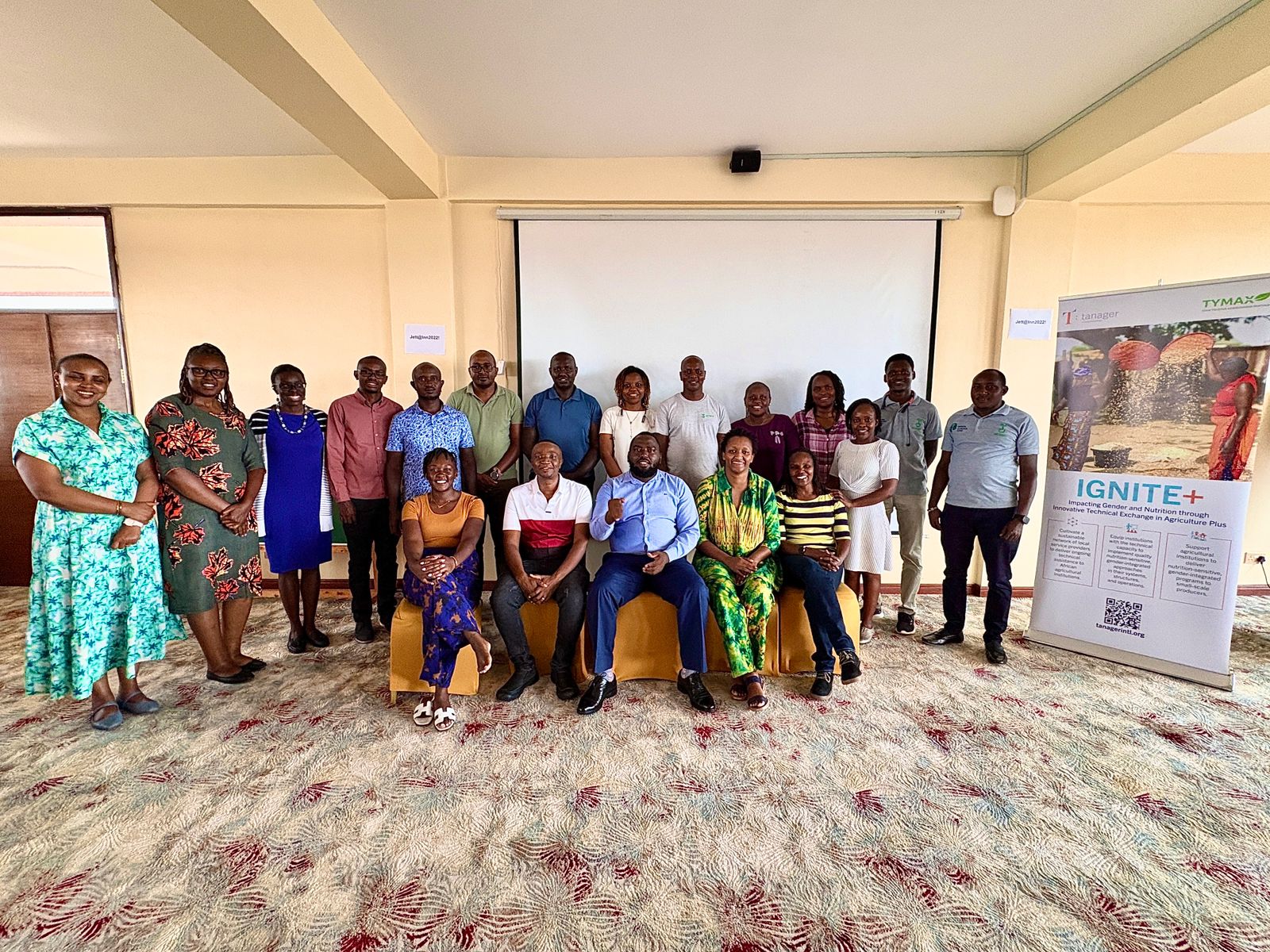
In Kenya’s arid and semi-arid rangelands, resilience is often framed in the context of droughts, unpredictable rainfall patterns and declining rangeland health. Also, resilience depends on who participates in decision-making, how value chains are structured, and whether households are able to eat better as their landscapes recover. While these issues remain critical, discussions during the recent Conservation International (CI) – Towards Ending Drought Emergencies (TWENDE) project, Tymax Agribusiness Solutions and Tanager’s Impacting Gender and Nutrition through Innovative Technical Exchange in Agriculture Plus (IGNITE+) partners’ forum, brought together over 30 participants, in Emali, Kenya highlighted a broader perspective.
Why TWENDE project?
The TWENDE project sits at the center of this conversation. It works through different partners across 11 counties to restore rangeland ecosystems and strengthen livelihoods. The International Union for Conservation of Nature (IUCN) is the accredited entity responsible for overall TWENDE project management, oversight and accountability to the funding organization, Green Climate Fund. The project implementation is led by the National Drought Management Authority, the State Department of Livestock and Conservation International in collaboration with local service providers among them Kenya Forestry Research Institute, Justdiggit, Mt. Kenya Hub, Northern Rangelands Trust, Big Life Foundation, Maasai Wilderness Conservation Trust, and Anglican Development Services Eastern, responsible for field implementation activities. Many of these organizations are known at national or landscape level. Their work is grounded through conservancies, women’s groups, youth associations, producer organisations and county structures. It is at this level that the policy translates into real decisions about grazing, enterprises, incomes and food. The CI - TWENDE project supports investments across four key value chains —gums and resins, honey, fodder and grass seed/meat, and camel milk. Alongside this, is a gender and youth action plan and a dedicated working group that brings together the project management unit, executing entities and service providers to drive gender and youth integration. The new collaboration between Tanager’s IGNITE+ project and its Local Service Provider in Kenya, Tymax Agribusiness Solutions Limited, is helping TWENDE partners take the next step of deliberately identifying where gender and nutrition can be strengthened within the ongoing work of component 3and the implementing partners.
Strengthening Rangelands through Gender and Nutrition Integration
At Emali, when partners shared their experiences, the emphasis shifted from “what we did” to “where the gaps and opportunities lie.” Encouraging stories of women taking new roles in restoration and enterprises, youth taking on implementation and leadership responsibilities, and communities beginning to link ecosystem gains with improved livelihoods. At the same time, several recurring patterns emerged including limited depth in gender and nutrition across some teams, competing priorities and the need for stronger coordination and adaptive management. These insights helped clarify where the collaboration between the CI’s TWENDE project and Tanager’s IGNITE+ project can have the biggest impact, by translating existing gender and youth commitments into concrete actions across the gums and resins, honey, fodder and grass seed/meat, and camel milk value chains. Tanager-led sessions helped partners to visualize what meaningful gender and nutrition integration looks like in practice. By revisiting foundational gender concepts and linking them directly to the work of CI’s TWENDE project, the discussions highlighted how gender dynamics affect who accesses pasture and water, influence participation in rangeland governance, determine control over income and affect who ultimately benefits from emerging enterprises. Partners were also invited to reflect on their own institutional journeys, where they began on gender and nutrition, the progress made and the challenges that remain. This simple but powerful exercise surfaced both achievements and bottlenecks giving the Gender and Youth Action Plan concrete and actionable steps for follow up.
Why is Nutrition at the Heart of Conservation Efforts?
Nutrition added another important layer —not as a separate “nutrition project,” but as an integral part of TWENDE’s ongoing work of soil and water conservation, rangeland management and agroforestry. They all influence what farmers can grow, sell and put on the table. As partners reflected on their work, it was evident that restoration initiatives and value chain investments can be designed to support more diverse diets, more stable food supplies and safer, better-quality products especially when they recognize women’s central role in food production, preparation and household decision-making. Several priorities emerged for discussions on strengthening gender and nutrition integration under this tripartite collaboration. These include: • Making gender and nutrition visible in annual plans and budgets, with clear responsibilities and financial resources attached. • Refining indicators to ensuring monitoring systems capture changes in decision-making power, access to opportunities and overall household wellbeing • Leverage the gender and youth task group as an active driver of change, by linking TWENDE project component 3 investments to gender and nutrition priorities and tracking progress consistently. Through these discussions, partners developed a shared understanding of the gender and nutrition integration agenda , elevating cross-learning from a peripheral activity to a central strategy for impact. Inclusive Conservation Efforts for Resilient Food System The IGNITE+ project is transforming African food systems by placing gender and nutrition at the center of conservation efforts. Through its partnership with Tymax Agribusiness Solutions Limited, the project will strengthen rangeland restoration and key value chains, including gums and resins, honey, fodder and grass seed/meat, and camel milk. This integrated approach not only enhances productivity and resilience but also fosters more inclusive institutions and better-nourished households, creating lasting impacts that benefit entire communities.
Enjoyed this article?
Share it with your Agribusiness community and help spread the knowledge!
Tymax
AuthorPassionate about sustainable Agribusiness practices and sharing knowledge with the agricultural community. Dedicated to helping farmers succeed through innovation and collaboration.